
Altai Tavan Bogd National park
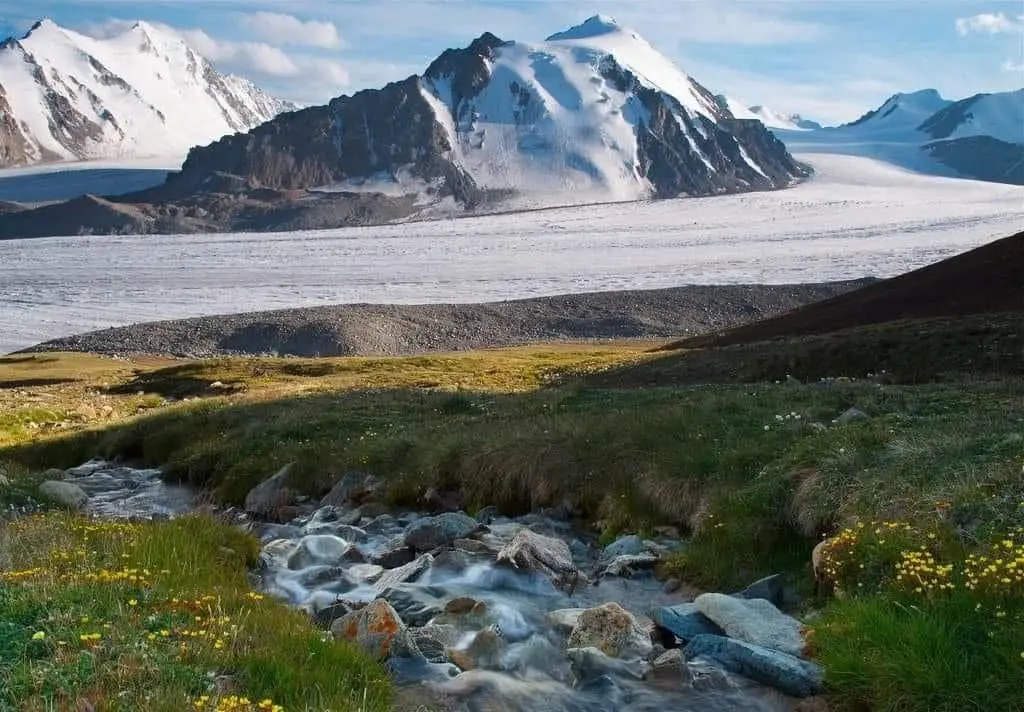
Altai Tavan Bogd National Park is located in western Mongolia, in Bayan-Ölgii Province. The park is home to the sacred peaks of the Altai Mountains and is considered one of the most important high-mountain regions in the country.
The highest peak is Khüiten Peak, which rises to 4,374 meters above sea level and is the highest point in Mongolia. The park also contains the country’s largest glacier, the Potanin Glacier, which stretches approximately 22 km in length and up to 9 km in width, making it the longest glacier in Mongolia.
This spectacular national park is renowned for its snow-capped peaks, glaciers, alpine lakes, and rich nomadic culture, offering some of the most dramatic landscapes in western Mongolia.
Tsagaan Suvarga
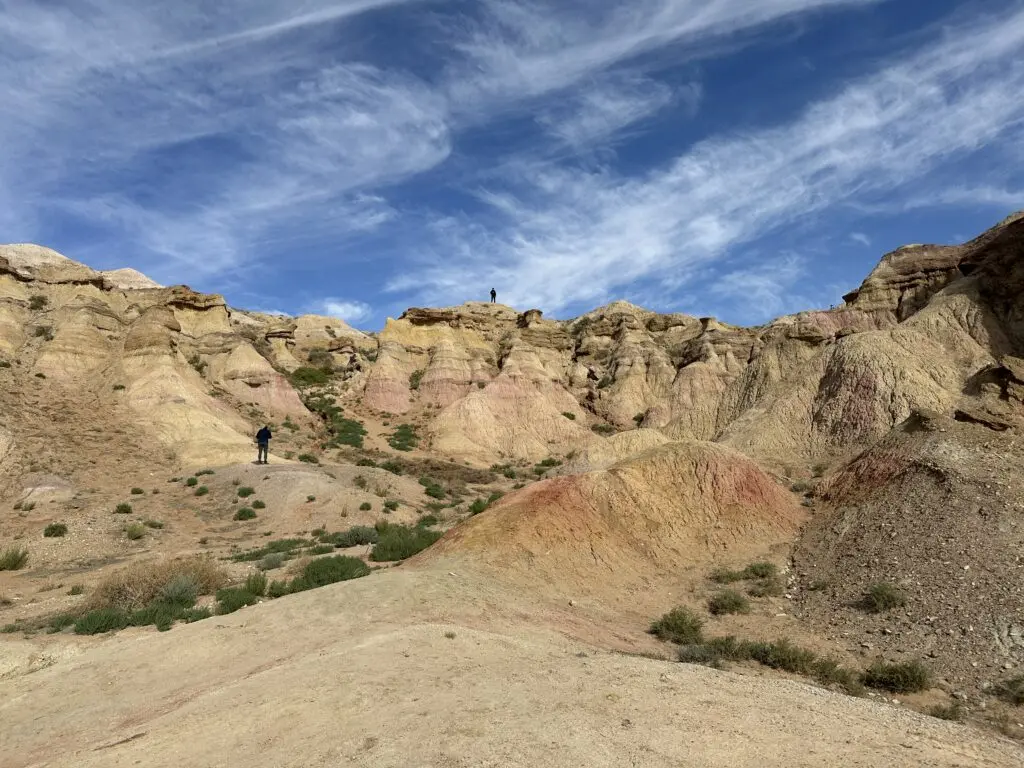
Tsagaan Suvarga is one of the most remarkable natural destinations in Mongolia, located in Dundgovi Province. Renowned for its striking limestone cliffs, the formation features layers of white, pink, and orange hues shaped by thousands of years of wind and water erosion, creating a spectacular and unique landscape.
YOL VALLEY
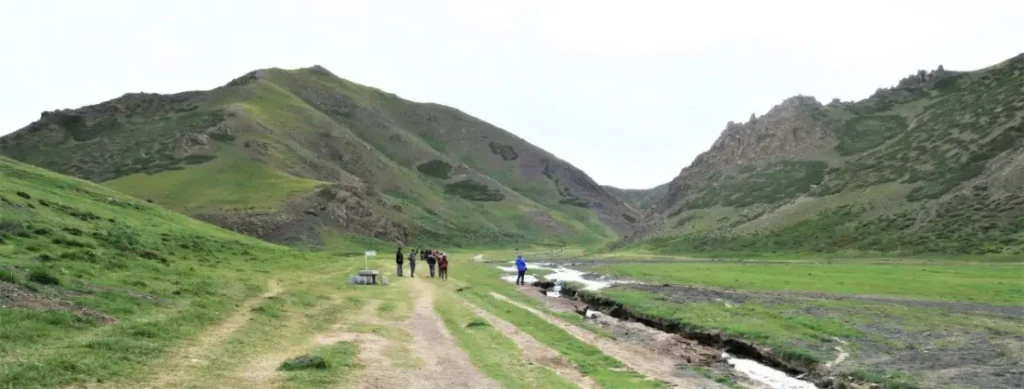
Yol Valley is one of the most remarkable natural sites in Mongolia, located within the Gobi Gurvansaikhan National Park in the Gobi Desert. The valley lies in the Three Beauties Mountains (Gurvan Saikhan Mountains) and is known for its deep, narrow gorge and dramatic rock formations.
Due to the unique microclimate of the canyon, ice can remain in the shaded areas until early summer, creating a striking contrast with the surrounding desert landscape.
KHONGOR SAND DUNES
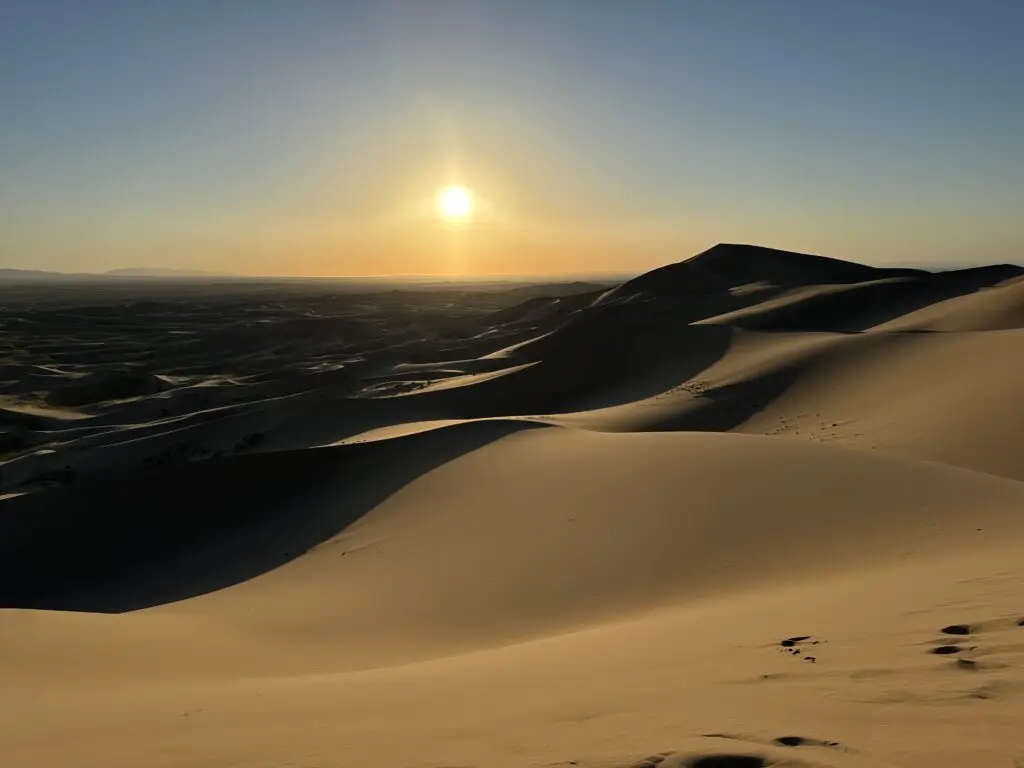
Khongor Sand Dunes are located in the Gobi Desert and are among the largest and most impressive sand dune formations in the region. The dunes stretch for approximately 200 km in length, creating a vast and dramatic desert landscape.
At the base of the dunes flows the Seruun Bulag River, where patches of green grass form a striking contrast with the surrounding golden sands, making the area one of the most scenic destinations in the Gobi Desert.
BAYANZAG
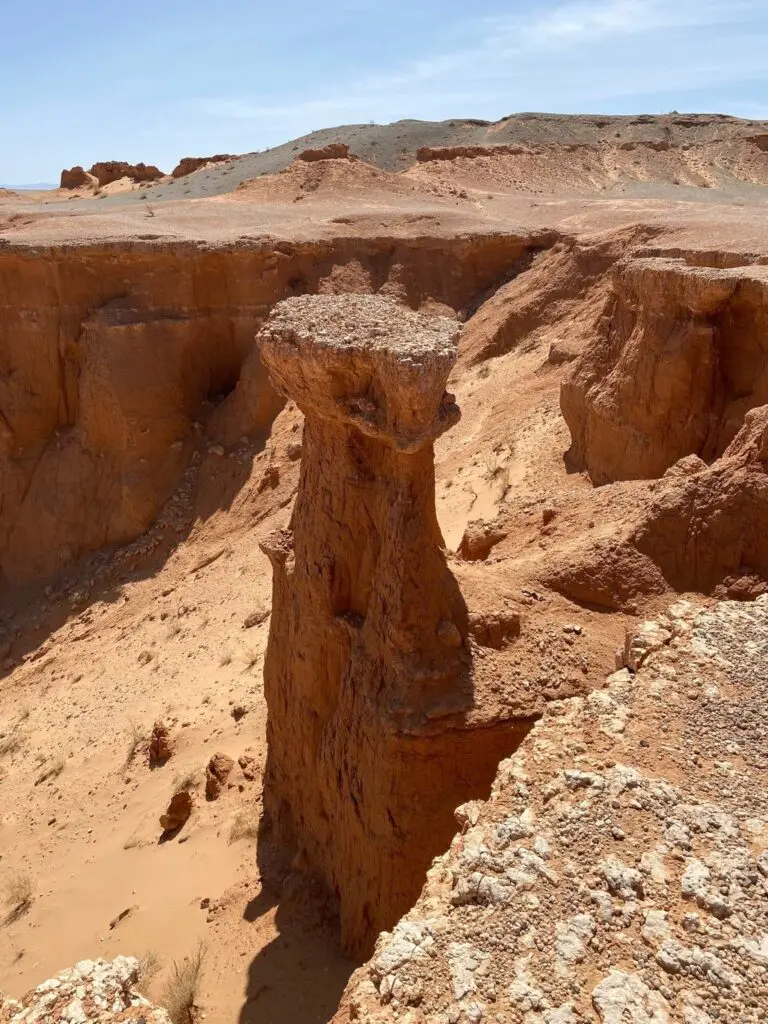
Bayanzag is one of the most significant sites in the Gobi Desert. The area is world-famous for its paleontological importance, as the first dinosaur eggs were discovered here by the American explorer Roy Chapman Andrews in 1921.
Often called the “Flaming Cliffs” due to the striking red sandstone formations, Bayanzag remains one of Mongolia’s most important fossil sites and a remarkable destination for both scientific research and visitors.
ONGI MONASTERY
Ongi Monastery is one of the historically significant monastery sites in central Mongolia. It is located near the border of Dundgovi Province and Övörkhangai Province along the Ongi River.
The monastery complex was once one of the largest religious centers in Mongolia, home to hundreds of Buddhist monks and several temples. During the period of political repression in Mongolia, particularly in 1937, many monasteries across the country were destroyed, and numerous monks were persecuted or executed under the communist regime led by Khorloogiin Choibalsan. Some monks managed to escape, but much of the monastery was destroyed during this time.
Today, the ruins of Ongi Monastery stand as an important historical and cultural site, reflecting both Mongolia’s rich Buddhist heritage and the difficult period of repression during the 20th century.
ORKHON VALLEY AND WATERFALL
Orkhon Valley and Orkhon Waterfall are located in central Mongolia, mainly within Övörkhangai Province. The area is one of the most popular destinations for visitors due to its scenic landscapes and rich cultural heritage.
The Orkhon Valley is recognized as a UNESCO World Heritage Centre World Heritage Site, reflecting its importance as the cradle of nomadic civilization in Mongolia. The spectacular Orkhon Waterfall, also known as Ulaan Tsutgalan, was formed approximately 20,000 years ago as a result of volcanic activity and earthquakes in the region. Today, the valley and waterfall are among the most beautiful natural attractions in central Mongolia.
Khorgo Extinxt volcanic and Terkhiin Tsagaan Nuur
Khorgo is an extinct volcano that formed approximately 16000-25000 years ago. The eruption created the surrounding lava fields and blocked a river valley, which eventually led to the formation of Terkhiin Tsagaan Lake, one of the most beautiful freshwater lakes in the region. Today, the area is known for its dramatic volcanic landscapes, clear waters, and rich natural scenery, making it a popular destination for visitors exploring central Mongolia.
URAN TOGOO
Khorgo is an extinct volcano that formed approximately 8,000–6,000 years ago. The eruption created the surrounding lava fields and blocked a river valley, which eventually led to the formation of Terkhiin Tsagaan Lake, one of the most beautiful freshwater lakes in the region. Today, the area is known for its dramatic volcanic landscapes, clear waters, and rich natural scenery, making it a popular destination for visitors exploring central Mongolia.
KARAKORUM AND ERDENE ZUU MONASTERY
Karakorum was the ancient capital of the Mongol Empire, established in the 13th century during the reign of Genghis Khan and later developed by his successors. Nearby, Erdene Zuu Monastery was built in 1586 using stones from the ruins of the ancient city, making it one of the oldest Buddhist monasteries in Mongolia and a significant symbol of the country’s religious and cultural heritage.
KUVSGUL LAKE NATIONAL PARK
Khuvsgul Lake National Park is located in northern Mongolia and is home to Khuvsgul Lake, one of the country’s most pristine freshwater lakes. Often referred to as the “Blue Pearl of Mongolia,” Khuvsgul Lake is renowned for its exceptionally clear water and is considered one of the thirteen most pristine lakes in Asia.
The surrounding national park features dense forests, rolling hills, and traditional nomadic settlements, making it a spectacular destination for nature lovers and travelers seeking an unspoiled landscape.
HUSTAI NATIONAL PARK
Hustai National Park is located near Ulaanbaatar and is internationally renowned as the natural habitat of the wild Przewalski’s horse (Takhi). The park was established to protect this rare and endangered species and has become a premier destination for wildlife observation, offering visitors the unique opportunity to see these iconic horses roaming freely in their native steppe environment.
TERELJ NATIONAL PARK
Terelj National Park is located approximately 80 km from Ulaanbaatar and is renowned for its dramatic granite rock formations and lush forests of Siberian larch. The park’s striking landscapes, including rolling valleys, rivers, and unique rock outcrops, make it one of Mongolia’s most accessible and picturesque natural destinations, ideal for hiking, wildlife observation, and cultural experiences.
GENGHIS KHAN STATUE COMPLEX
Genghis Khan Statue Complex is located approximately 54 km from Ulaanbaatar in the historic area of Tsojin Boldog. This landmark features the world’s largest equestrian statue of Genghis Khan and stands as a powerful symbol of Mongolia’s rich history and cultural heritage, attracting visitors from across the globe.
The statue is constructed from 250 tons of stainless steel and rises 40 meters in height, making it the tallest equestrian statue in the world. It commemorates Genghis Khan’s enduring legacy as a historic leader and embodies Mongolia’s national pride.
ULAANBAATAR CITY
Ulaanbaatar is the largest city and the capital of Mongolia, serving as the country’s political, cultural, and economic center. It is home to government institutions, universities, museums, and a vibrant mix of modern and traditional Mongolian life.